



Why the hardest part of a deal is your business card
By Roar Thun Wægger and Angel Niño Torres
Most people enter negotiation with a strong focus on winning. That is natural. Without training, many negotiators are mainly aware of their own position, their own pressure and their own need to get a good result.
Then they start learning negotiation. Often, they arrive at a new conclusion: they want a win-win deal. That also makes sense. No one enters a negotiation hoping to lose, and for a deal to close, both sides usually need to leave with enough.
But training should not stop there.
With more practice, feedback and sparring, the real question becomes sharper:
what is beneficial in this case?
Sometimes the best work is to create more value. Sometimes the task is to divide the value already on the table. Sometimes the relationship must be protected for years. Sometimes the opportunity exists now, and the value must be captured now.
Then they take a negotiation course. Usually some version of principled negotiation, the school of thought built on Roger Fisher, William Ury and Bruce Patton’s Getting to Yes. The course teaches them to focus on interests, look for options that serve both sides, use objective criteria, and treat a deal as more than splitting a fixed pie.
Somewhere in that learning, another conclusion often sets in beside the book’s actual message. Win-win becomes the sophisticated path. Bargaining over a single number – distributive negotiation – becomes the part serious negotiators are supposed to skip.
That conclusion was never what Fisher, Ury and Patton meant to teach. It may turn out to be one of the book’s most expensive misunderstandings.
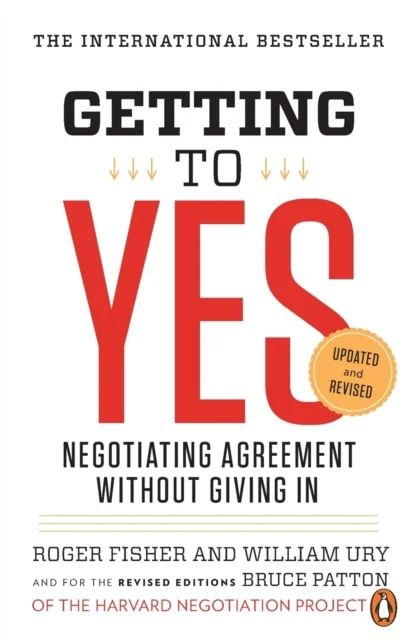
The misunderstanding has done real damage. It has made many negotiators too quick to rush through the distributive phase, too quick to apologize for the moment where value, credibility and future trust are often decided. In practice, negotiations have more going on than any single theory can fully predict.
Sometimes the deal cannot grow until after both sides have settled the hard numbers once and proved to each other they can handle pressure honestly. Sometimes the deal is already as large as it will get, and the only question left is how to divide it. Sometimes you are meeting the other side for the first time, with no shared history and no reason yet to trust each other. Integrative work often requires a kind of trust that simply is not there yet.
And sometimes the first distributive negotiation is your business card.
What training actually changes
Angel sees the same pattern in the law, business and political science students he teaches at Rafael Urdaneta University. Roar sees it in the students, executives, lawyers and advisors he trains internationally through WNI, and in the negotiation and mediation competitions he is active in. We see the same pattern in every room.
Getting to Yes remains one of the most important books in the field. A first reading of the book, especially by an untrained reader, often leads to conclusions the authors never intended. Many walk away believing they have to choose between the sophisticated work of integrative negotiation and what they then dismiss as primitive distributive bargaining.
A trained negotiator does not ask whether distributive negotiation is good or bad. They ask what the situation requires. They carry multiple tools and know each can be useful in the right moment. An untrained negotiator treats the same tools as if they cancel each other out, with value-claiming pulling in one direction and value-creating pulling in the other.
What separates a trained negotiator from an untrained one is rarely tone. Trained negotiators can tell, in the moment, whether they are claiming value or building it. They can be firm without becoming primitive, and they know when the conversation is doing both at once. Untrained negotiators tend to swing back and forth. They win the number and lose the room. Or they protect the relationship so carefully that they give away the value they were supposed to defend.
That is why distributive negotiation matters. It is the best moment a negotiator will ever get to show how they behave under pressure. One side has to give in, and there is nothing else on the table to expand.
What the other side is actually reading
When two people are arguing over a single number – a price, a term, a headcount, a deadline, what the warranty covers – the number is not the only thing being negotiated.
The other side is reading how quickly you give ground. They are reading whether you explain your reasons or simply make your moves, and whether you treat their resistance as useful information or as something to push through. They are reading whether you stay calm when the conversation becomes uncomfortable.
The number is the surface. Underneath, they are answering a quieter question.
Can I trust this person under pressure?
By the time you reach the integrative phase, they may already have formed their answer. That answer decides how much imagination they bring to the table when you invite them to think bigger with you. Once the contract is signed, the number is settled. What stays with the other side is the memory of how you got there.
Why those impressions stick
Researchers Jared Curhan, Hillary Anger Elfenbein and Heng Xu published the Subjective Value Inventory in 2006 in the Journal of Personality and Social Psychology. Their framework measures how each party in a negotiation feels after the deal closes, independent of the final number, and tracks four dimensions of that internal experience.
The first dimension is how a negotiator feels about the deal itself. The second is how the negotiator feels about themselves afterwards, whether they acted with integrity and felt competent and walked out with their head up. The third is how they feel about the process, the conversation that got them there. The fourth is how they feel about the relationship and the other side as someone they might deal with again.
The final number mostly affects the first dimension. The other three are built throughout the negotiation, and they build up whether the moment in front of you is distributive or integrative.
What we have seen, both in classrooms and at the table, is that the other side keeps assessing along all four dimensions in real time, even when they cannot put it into words. Distributive bargaining done well becomes one of the first deposits a negotiator makes into the relationship account.
The chicken-and-egg problem at the heart of negotiation
You do not walk into a negotiation and simply decide whether it will be integrative or distributive. The resources on the table, the number of issues, what each side is authorized to agree to, the gap between what each side knows, and the commercial reality decide much of that for you. What you get to decide is how you behave, and this is where integrative negotiation runs into a chicken-and-egg problem.
To find creative solutions, both sides need to share information about what they actually want, what they can let go of, where their constraints are, and what they might value differently. That kind of information does not move across the table without trust.
But where does trust come from? Sometimes from a shared history, from reputation, from personal chemistry, or from having worked well together before. Those help when you have them. When you do not, trust has to be built in the room.
Trust needs evidence, and a distributive negotiation is one way to provide it. In an actual negotiation, your choices under pressure become visible to the other side in real time, and a successful round, handled well, is often what earns the trust that an integrative negotiation later requires.
The same logic applies, from a payment-term discussion in a supply contract to a high-stakes political or peace negotiation. Context, stakes and available tools all shift across these settings. What stays constant is the need for deliberate behavior under pressure.
What trust-building distributive negotiation looks like
Four behaviors do most of the work. None of them are dramatic.
The first is pacing. A concession that comes too fast tells the other side that the number did not matter to you, or that you did not believe in it. Trained negotiators move slowly enough that each concession means something.
The second is reasoning. Every number arrives with the thinking behind it. A number with reasoning is something the other side can work with. A number without reasoning is a demand, and people refuse demands.
The third is acknowledgment. Before pushing back on the other side’s position, the trained negotiator shows they have understood the reason behind it. Acknowledgment is not the same as agreement. The trained negotiator simply repeats, in their own words, what the other side has said. People negotiate more flexibly with someone who has heard them.
The fourth is restraint under pressure. When the temperature rises, the untrained negotiator speeds up, raises their voice, or restates their position more loudly. The trained negotiator does the opposite. They pause. They ask a clarifying question. They give the room a moment to cool.
Done this way, distributive negotiation is the conscious and respectful use of pressure.
The door, not the exit
Some negotiations really are one-shot. A supplier you will never work with again. A court settlement, or a one-time asset sale. A short window where a business opportunity exists today and may disappear tomorrow.
In those cases, the purpose may be getting the most you can out of this one deal rather than building something that lasts. A negotiation advisor who ignores that reality is being careless. Even so, how you capture value still matters. The goal is to be clear, decent and intentional while protecting the value that is actually on the table. You may never meet the other side again, but your behavior still leaves information behind. It affects your reputation, your client’s reputation, the next negotiation, and sometimes the people watching from outside the room.
When the negotiation has room to grow – multiple issues, future deals, third parties, implementation risks, a continuing relationship – the distributive phase is often the door to everything that follows. The creativity you will later need from the other side depends on the trust they built while you were still arguing over the one thing.
Here is a simple scenario.
A supply contract lands on your desk. The other side asks for a 30-day payment term. The market standard they have been quoted is 60. You want to counter at 45 and move quickly to what feels like the interesting part: the volume commitments, the exclusive rights, the future business.
Stop and ask yourself what the other side will learn about you during the 30-vs-60 conversation. If you are like most negotiators in that seat, you do not have an answer ready.
Now imagine you run the conversation deliberately. You pace your concessions. You explain why 45 is 45. You acknowledge why 30 days matters to them. You ask what pressure the payment term is meant to solve. You protect your own side without making their concern look illegitimate. You close the deal.
Two months later, the other side comes back for a second contract, a bigger one, with terms the first contract alone did not justify. You wonder why. The simplest explanation you may hear from them sounds something like: “We liked how you handled the 45-day thing.” What they really mean is that they have learned they can have a hard conversation with you and still get to an answer.
The 45-day thing was the relationship. They just did not know it at the time.
This is where negotiation advisors earn their place. The work is not to impose a favorite model on every situation. It is to help the client read the context: what purpose the negotiation must serve, what value is at stake, what relationship should be protected, what pressure can be used, and what reputation should remain when the deal is done.
Method matters because context matters.
The work is to use both kinds of negotiation consciously, in service of the purpose, the relationship, the risk and the value at stake.
A relationship you take care of today may become the door that opens five years from now.
Whether a negotiation is naturally distributive, naturally integrative, or the mix that most real deals turn out to be, relationship-building is a lifelong dividend.
But relationship-building does not mean avoiding the hard numbers.
Sometimes the hard numbers are the door.
The question is not whether you walk through it.
The question is what the other side learns about you when you do.
Roar Thun Wægger is the founder of Wægger Negotiation Institute. He teaches and advises students, executives, lawyers and organizations internationally in negotiation and conflict resolution. A contributing author to Negotiators Who Change the World, he is active in international negotiation and mediation competitions.
Angel Niño Torres is a Venezuelan attorney, negotiation scholar and founder of Venley.ai, an AI-powered legaltech company for the Venezuelan market. He is a professor at Rafael Urdaneta University, where he teaches negotiation to more than 200 law, business and political science students each year.
